
Previous articles
Czech Erasmus Study Visa: Interviews, Language and Appointment Preparation
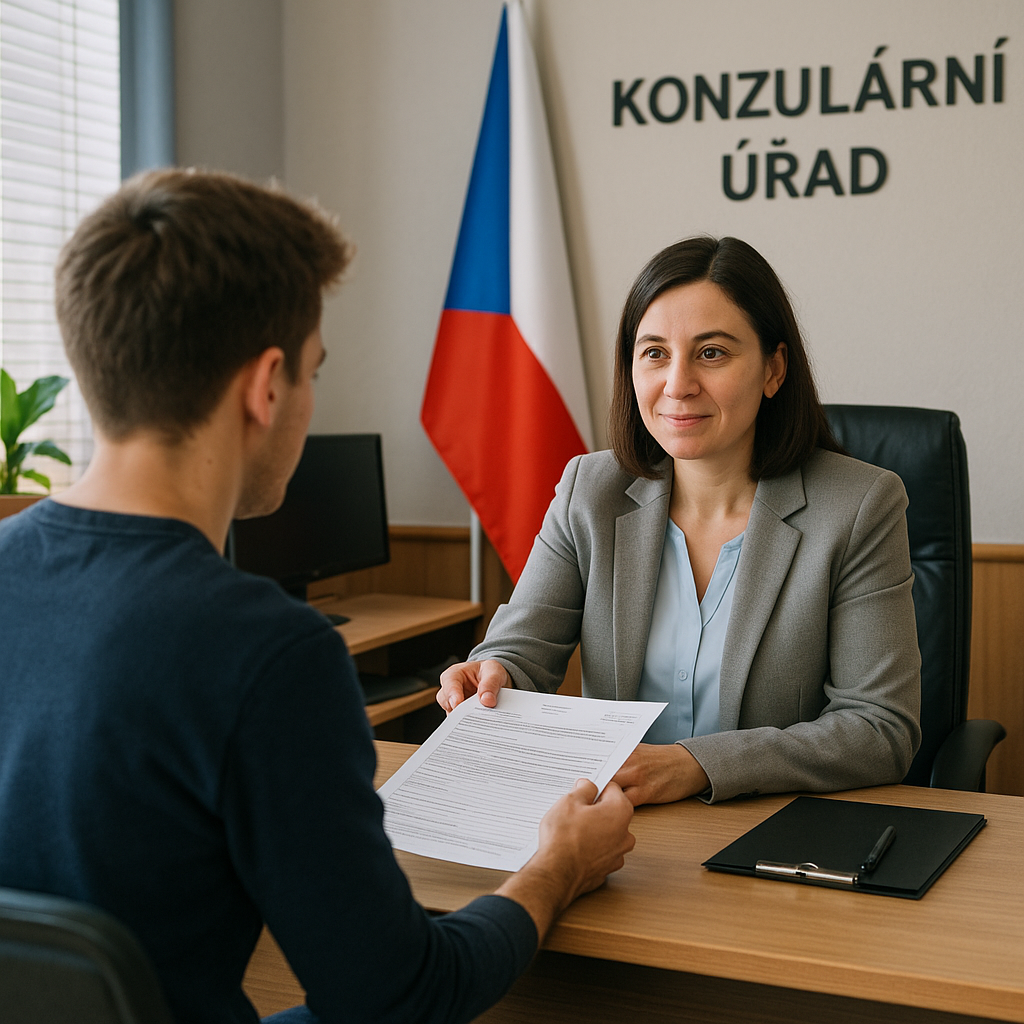
“Will there be an interview, and which language will be used?” is a reasonable question before a Czech study visa appointment. Prepare for the possibility of an interview. An Erasmus place does not by itself provide a universal exemption, and another student's brief document handover does not establish the rule for your application. The competent mission's instructions and any subsequent official invitation take priority over anecdotes.
1. First establish whether you need this procedure
This guide primarily concerns third-country nationals applying for a Czech long-term study visa for a stay exceeding 90 days. EU citizens follow a different free-movement framework. Short stays, long-term visas and long-term residence permits are different categories. Some students holding qualifying study permission from another EU Member State can use a mobility route, subject to its conditions. Ask your host university and the official authority which route fits your citizenship, existing status and actual programme; “Erasmus” alone is not the classification.
2. Can an interview take place?
Yes. The Foreign Ministry's general long-term visa guidance describes in-person submission, an interview and fingerprints. The Interior Ministry's study-visa instructions say staff may conduct an interview at submission and may invite the applicant again during examination. Exceptions to personal submission can exist in justified cases; do not assume one applies to you. There is no sound basis for promising that every Erasmus applicant in Istanbul or Ankara will face no questions. Read and answer any official interview invitation.
3. Who examines the application?
The diplomatic mission receives the application, checks the submission and carries out relevant procedural steps. The Ministry of the Interior examines and decides long-term visa applications. This division of responsibilities does not make the consulate a passive collection desk or remove its role in interviews and requests. A short initial appointment also does not mean the examination has finished. Keep the reference number, check official communications and provide requested additions within the specified deadline.
4. Which language should I prepare for?
The Interior Ministry explains that administrative proceedings and their documents use Czech, with officially certified Czech translations of foreign-language documents as required. The language used for practical communication at a mission must be confirmed with that mission. Do not assume a Turkish-speaking officer, the exclusion of English, or a universal ban on Czech. If you need interpreting for a formal act, ask about the required qualifications and arrangements before the appointment. Applicants generally arrange and pay for their interpreter; an accompanying friend may not meet the rules.
5. Istanbul appointments: check the current instructions
The Istanbul Consulate's page updated on 24 September 2026 requires proper email registration for long-term applications and specifies the subject, personal details and PDF attachments. Local jurisdiction must also be respected. Students formally included in the Student Facilitation Programme follow a different route: the Consulate contacts them directly after receiving the programme information. Inclusion is not automatic merely because you are an Erasmus student. Confirm your status with the university and follow the route that actually applies. Check Ankara's own instructions if it is your competent mission.
6. Practical preparation for questions and documents
- Know your university, programme, dates, intended accommodation and funding arrangements.
- Check that acceptance, scholarship, bank and housing documents describe a consistent situation.
- Use the current category-specific checklist for originals, copies, translations and legalisation.
- Answer truthfully and ask for clarification if you do not understand a question; avoid memorised invented answers.
- Read a record before signing and raise any misunderstanding through the appropriate interpreter or officer.
These are preparation topics, not an official fixed list of interview questions. A complete file and clear answers do not guarantee approval. Start early, monitor messages after submission and ask the host institution about realistic late-arrival options if necessary.
Official sources
- Czech Ministry of Foreign Affairs — Long-Term Visa
- Czech Ministry of the Interior — Long-term Visa for the Purpose of Studies
- Czech Consulate General in Istanbul — Long-term Visas and Permits, updated 24 September 2026
- Czech Ministry of the Interior — Language of proceedings and interpreting
- Czech Ministry of the Interior — EU Citizens and Their Family Members
- Czech Ministry of the Interior — Mobility under study permission issued by another EU Member State
Formatting reviewed:
The text and images were adapted to this reading layout. This does not mean the information has been checked again for accuracy or current validity.
Last content revision:
View original publication