
Previous articles
Guide to Filling Out Italy Residence Permit (Permesso di Soggiorno)
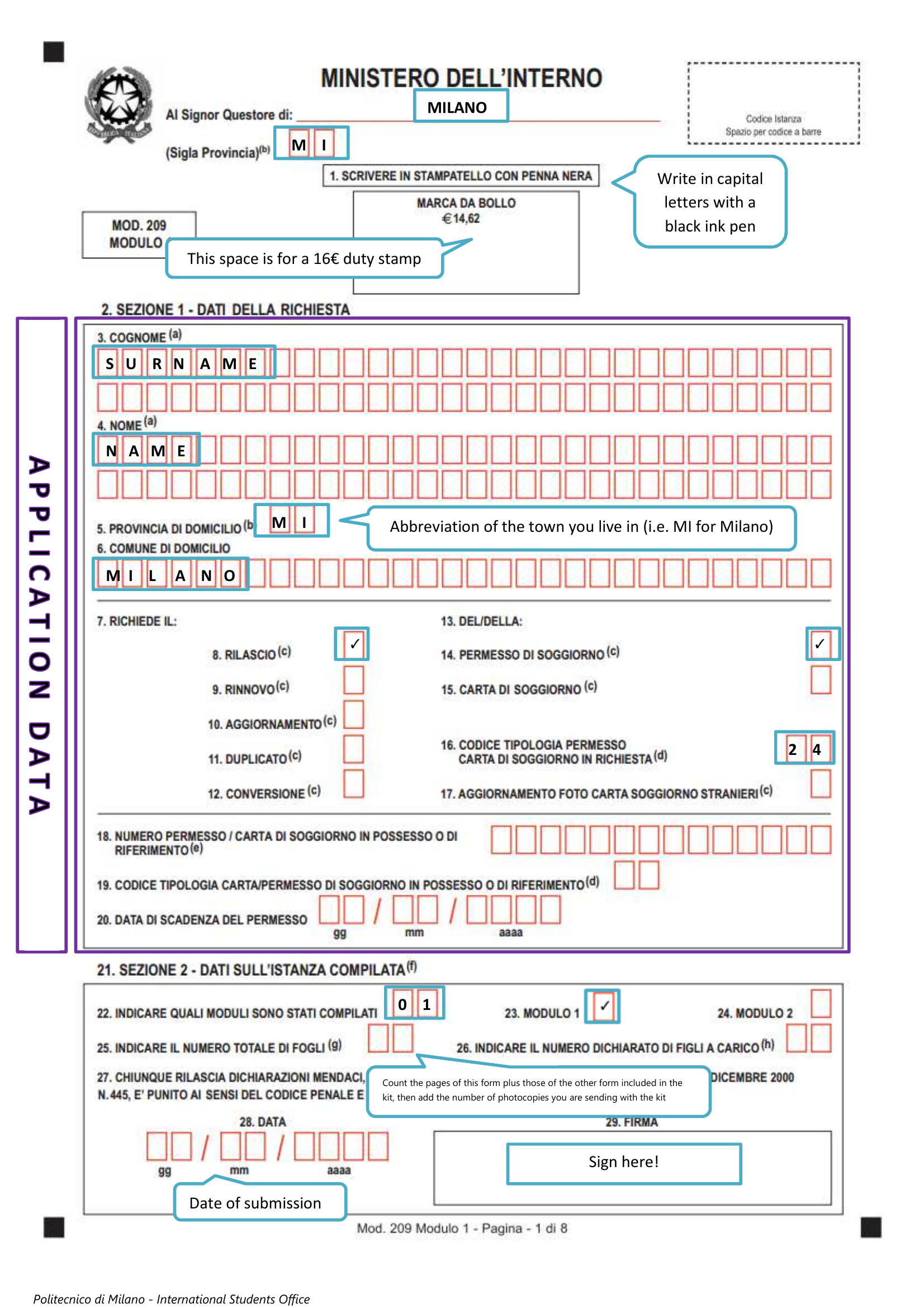
The four scans below are a historical Politecnico di Milano example for a student residence-permit postal kit. Their English annotations are explained here in accessible text. They contain sample labels, not a completed person's application. Use a current kit and its instructions; the illustrated Milan address, selections and amounts are not universal answers.
Before completing the kit
Check your permit category and whether this is a first application or renewal. Poste lists study applications among postal-kit procedures. Follow your university and competent Questura instructions for your situation. Obtain the current kit from a Sportello Amico office; do not submit these annotated images as your form.
Scan 1: application details and signature
The example says to write in block capitals with black ink. At the top, Al Signor Questore di identifies the competent city and Sigla Provincia its province code. MILANO and MI are the example's locations. Marca da bollo is the revenue-stamp space; see the fee warning below.
In Section 1, Cognome is surname and Nome given name. Provincia di domicilio and Comune di domicilio concern where you live. Rilascio means first issue; Rinnovo renewal. The other boxes cover updating, replacement and conversion. The scan marks Permesso di soggiorno and code 24 for its study example; select the category that actually applies. Fields 18–20 concern an existing permit's number, category and expiry where relevant.
Section 2 records the modules completed: the sample shows 01 and ticks Modulo 1. For the total sheets, its note counts form pages, the other kit form and accompanying photocopies. Verify the current counting instructions. Enter dependent children only as applicable. Data is the submission date and Firma your signature. Do not copy the specimen's selections mechanically.
Scan 2: personal, passport and visa information
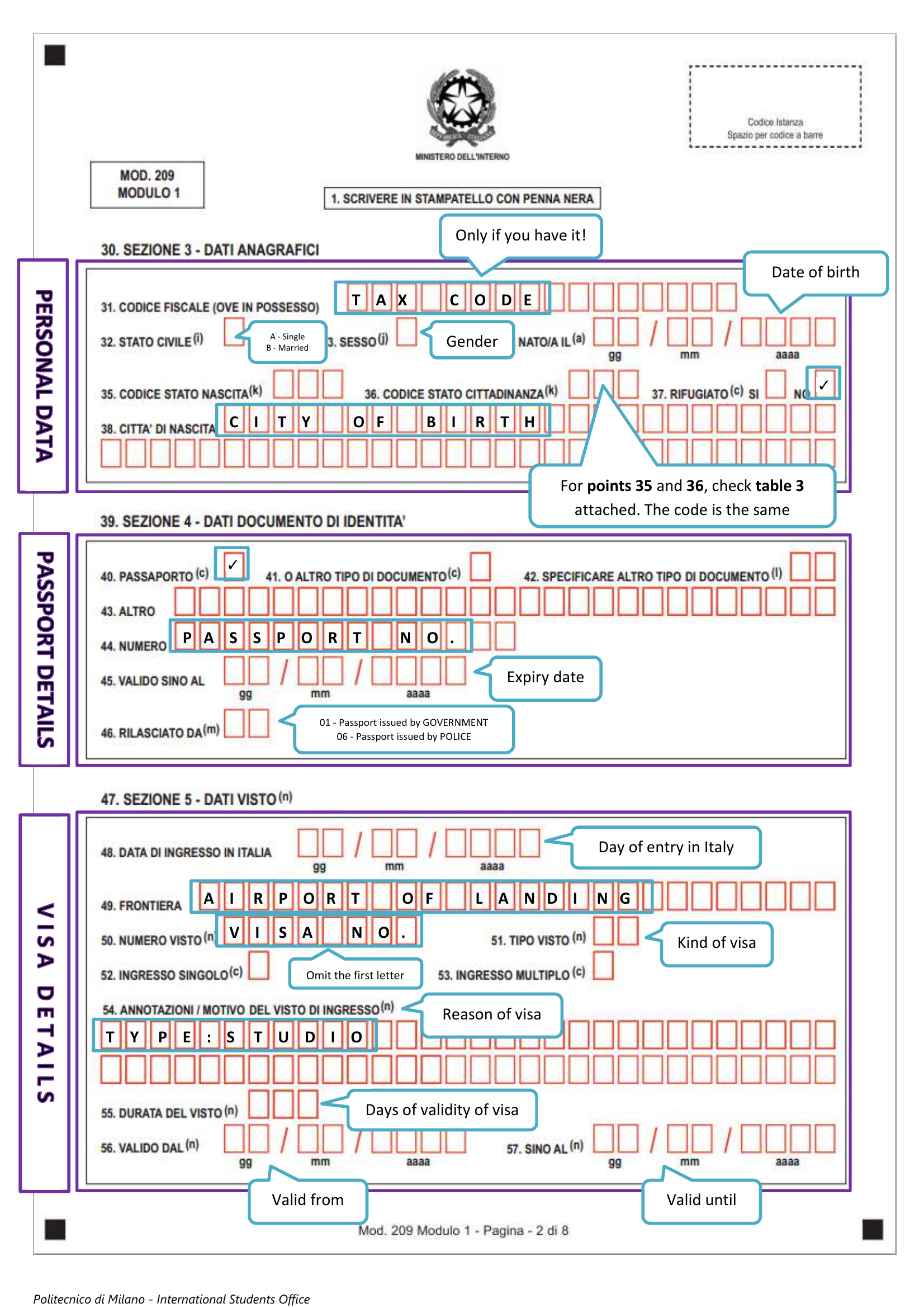
Section 3 asks for Codice fiscale, if already held, civil status, sex, date and city of birth, and birth-country and citizenship codes. The old note illustrates A for single and B for married; consult the current legend for your status. Use the country-code table for each field separately: nationality and birthplace need not match. Answer the refugee-status question truthfully rather than copying the marked “No”.
Section 4 identifies the document used. The example ticks Passaporto; enter its number and expiry in Numero and Valido sino al. Rilasciato da is the issuing authority. The annotation illustrates 01 for a government and 06 for police; check the current code table and your actual issuer.
Section 5 covers entry date, border crossing or arrival airport, visa number and type, single or multiple entry, reason, duration in days and validity dates. Valido dal means valid from; Sino al valid until. The scan's instruction to omit a visa-number prefix is historical: confirm today's instructions before altering any number. STUDIO is the study reason illustrated, not a value for every applicant.
Scan 3: addresses and contact details
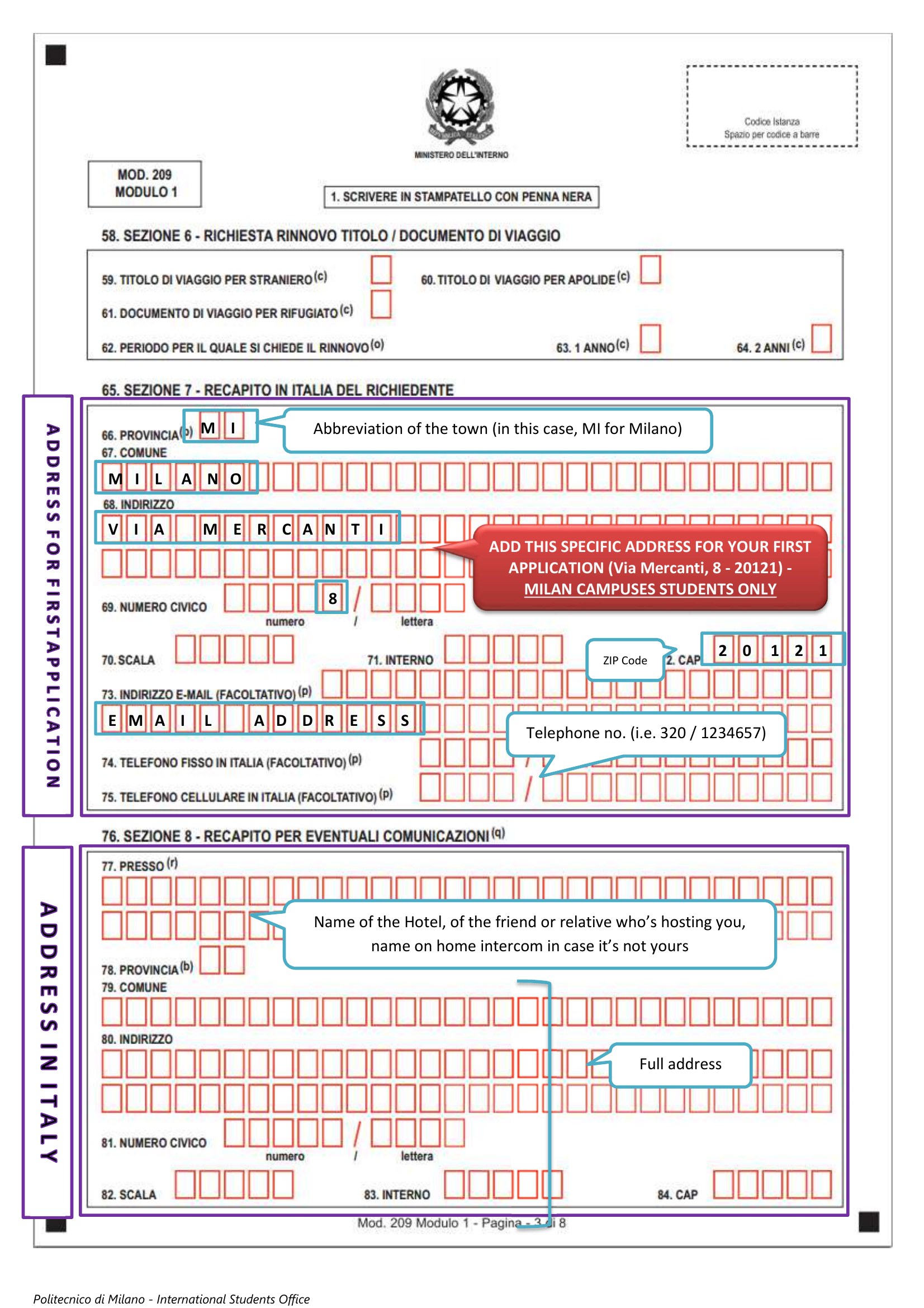
Section 6 concerns travel-document requests, not ordinary address details; complete it only if applicable. Section 7 is Recapito in Italia del richiedente. It asks for province, municipality, street, house number, staircase, apartment and CAP postcode, plus optional email and telephone details.
The highlighted Via dei Mercanti, 8 – 20121 Milano was a specific first-application instruction for Polimi Milan-campus students. It is not a general residence address to copy. Confirm with your own campus whether its present instructions apply. Section 8 concerns communications: Presso identifies the hotel, host or name on the intercom, followed by the complete contact address, house number, staircase, apartment and postcode.
Scan 4: document checklist
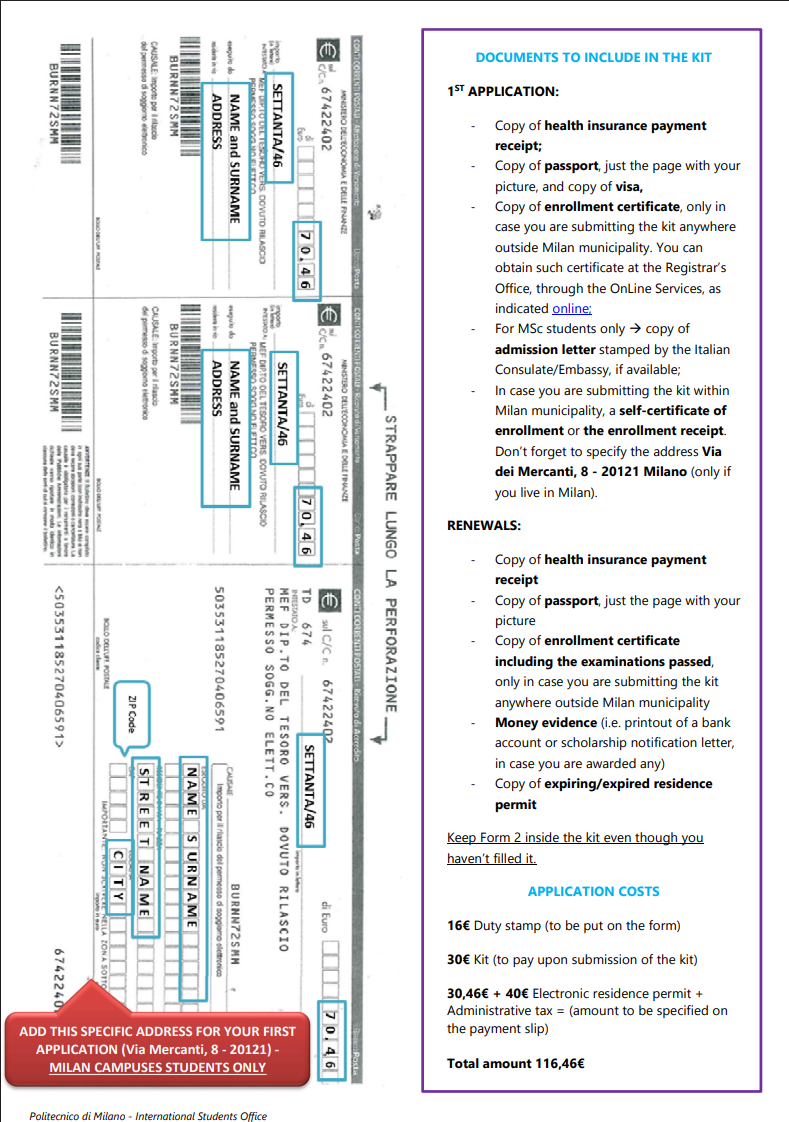
For first applications, the historical list includes health-insurance payment evidence, passport identity page and visa, and enrolment evidence. It distinguishes enrolment certification outside Milan from self-certification or an enrolment receipt within Milan; it also mentions an admission letter for master's students when available. These are Polimi-specific distinctions: verify the document appropriate to your programme and location.
For renewal, the scan lists health-insurance evidence, passport, enrolment with passed examinations, financial resources such as a bank statement or scholarship award, and the expiring or expired permit. Payment evidence alone does not establish adequate insurance coverage. Check current requirements for coverage, academic progress and supporting documents. The old guide says to leave blank Modulo 2 inside the kit; do not treat that as universal, especially if income evidence requires that module.
Costs and submission
The scans show an obsolete printed €14.62 stamp value, a €16 annotation, a €70.46 payment and a €116.46 example total. They are archival figures, not a quotation for your case. Current official guidance separates the stamp, postal handling, electronic-card production and any contribution due by permit type/duration. Check the linked fee table before paying.
Complete the appropriate payment slip with your own details. Submit the kit open, bring your original identity document and keep the receipt and appointment letter. The postal receipt is not the final permit: follow the subsequent Questura instructions and any request for further documents.
Historical annotated scans
Official instructions to check before applying
Formatting reviewed:
The text and images were adapted to this reading layout. This does not mean the information has been checked again for accuracy or current validity.
Last content revision:
View original publication